Skip to main content Screen Reader Website Version

Statistical Consulting for Business & Graduate Research

A Thoughtful, Clear Approach to Data

Quantitative Analysis

Quantitative analysis helps turn numbers into meaningful answers. It includes the statistical methods used to measure patterns, compare groups, test relationships, and support sound conclusions. While terms like p values, significant differences, descriptive statistics, and statistical inference can feel intimidating, they are tools. A hammer and nail are tools for hanging a picture on the wall. Statistics are tools for understanding the results of the data and how confident we can be in them. Let’s not love or hate tools. Let’s just use them to get the project done.

A strong quantitative approach does more than run calculations. It helps organize research questions, identify the right statistical methods, and present findings in a way that is clear and useful. Whether the goal is to summarize data, compare outcomes, or interpret trends, quantitative analysis provides a structured way to move from raw numbers to reliable insight.

Statistics can also become much easier to understand when they are explained through memorable examples and visual thinking. For instance, a graph can feel less abstract when its structure is tied to a simple mental image. These kinds of teaching tools help make technical concepts more accessible and less overwhelming, especially for students, researchers, and professionals who want practical understanding rather than unnecessary complexity.

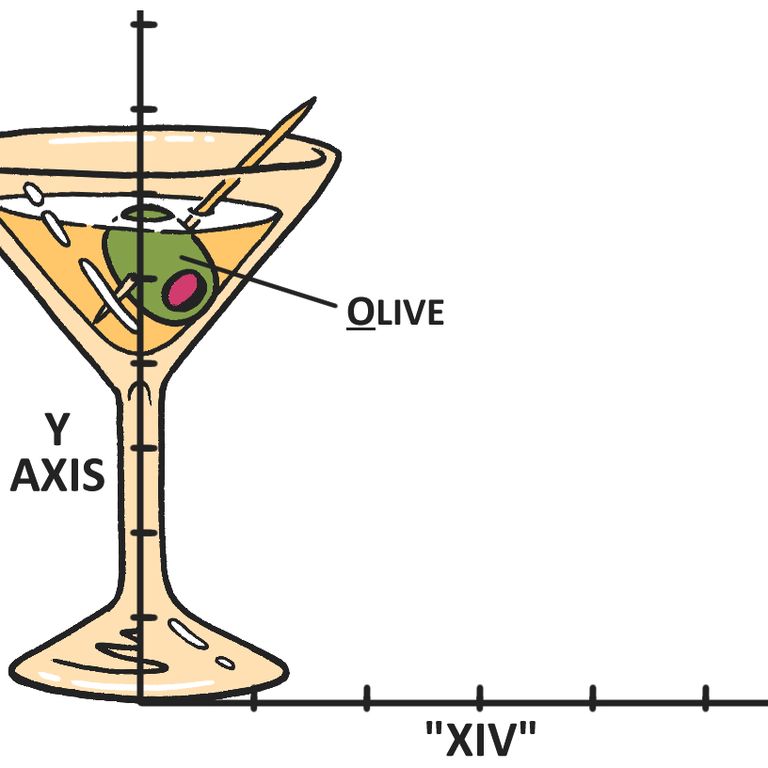
The martini glass symbolizes a graph. The martini glass itself stands for the “Y” axis, always on the left. Its olive stands for “O” as in ordinate (another name for the Y axis that is easy to forget). In the term “XIV,” the X stands for the X axis, always on the bottom, and combined with IV looks like a Roman numeral that helps you remember that the independent variable (IV) goes on the X axis.

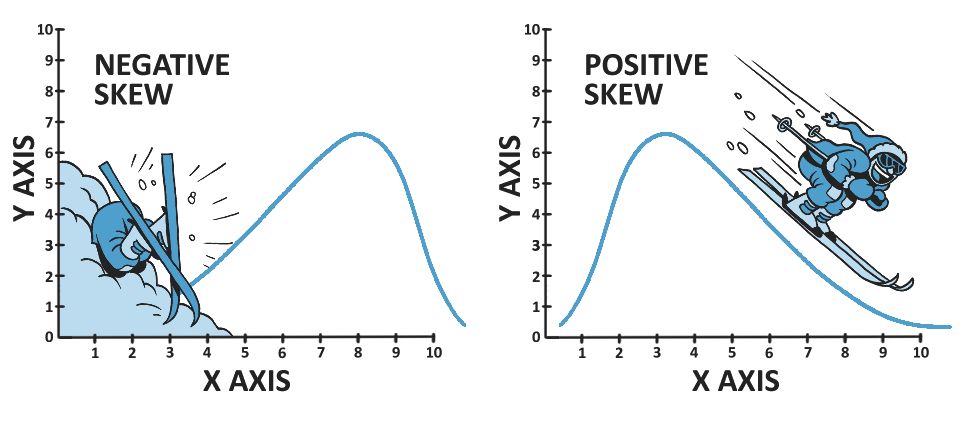
The skiers symbolize skew. Graphed data form patterns. One pattern is a skew towards high or low numbers. Data rich in low numbers have a “positive skew,” easier to remember when thinking about a positive experience skiing down a snow-sparkled mountainside. Data rich in high numbers have a “negative skew,” easier to remember when thinking about slamming into the Y axis!
Qualitative Analysis

Qualitative analysis focuses on meaning, context, and patterns within narrative or text-based data. This often involves reviewing interviews, written responses, observations, or open-ended feedback and then organizing that information into codes and themes. The goal is to uncover the larger story within the data while staying grounded in what participants actually shared.

One useful way to think about qualitative analysis is as a puzzle made up of many small pieces. Each code represents one piece of information. As those pieces are carefully reviewed and grouped together, broader themes begin to emerge. Unlike a puzzle from a box, however, qualitative analysis does not come with a picture of the finished result. The researcher must thoughtfully sort, compare, and interpret the pieces to reveal the clearest and most accurate overall pattern.

When done well, qualitative analysis brings structure to complex narrative information without losing the human side of the data. It helps transform individual statements and experiences into organized findings that can inform research, decision-making, and deeper understanding.

Some projects require both quantitative and qualitative analysis. In these cases, mixed methods research can offer a more complete understanding by combining the strength of numbers with the depth of narrative insight. We help integrate both approaches so your findings feel cohesive, balanced, and useful.

This can be especially valuable for academic research, program evaluation, dissertations, community studies, and applied research projects where both measurement and lived experience matter.

Making Statistics More Understandable

One of the values that sets Good Natured Statistics apart is the belief that statistical concepts can be taught in a more memorable and encouraging way. Research methods do not have to feel cold or confusing. We use relatable explanations, visual thinking, and practical examples to help make difficult concepts easier to understand.


Support That Meets You Where You Are

Whether you need help interpreting results, organizing qualitative findings, or choosing the right analytical path for your project, Good Natured Statistics offers guidance that is clear, thoughtful, and grounded in real understanding.